Holy Well Chapel, Bakonybél
Two, popular tourist destinations, located 1 km from the village, preserve the memory of a saint who played an important role in Hungarian history and the history of Bakonybél.
According to tradition, the monastery in Bél was founded by Saint Günther and Saint Gellért—who was later martyred—, who spent several years in a hermitage near this site. The community reverently preserves the legends of these two saints.
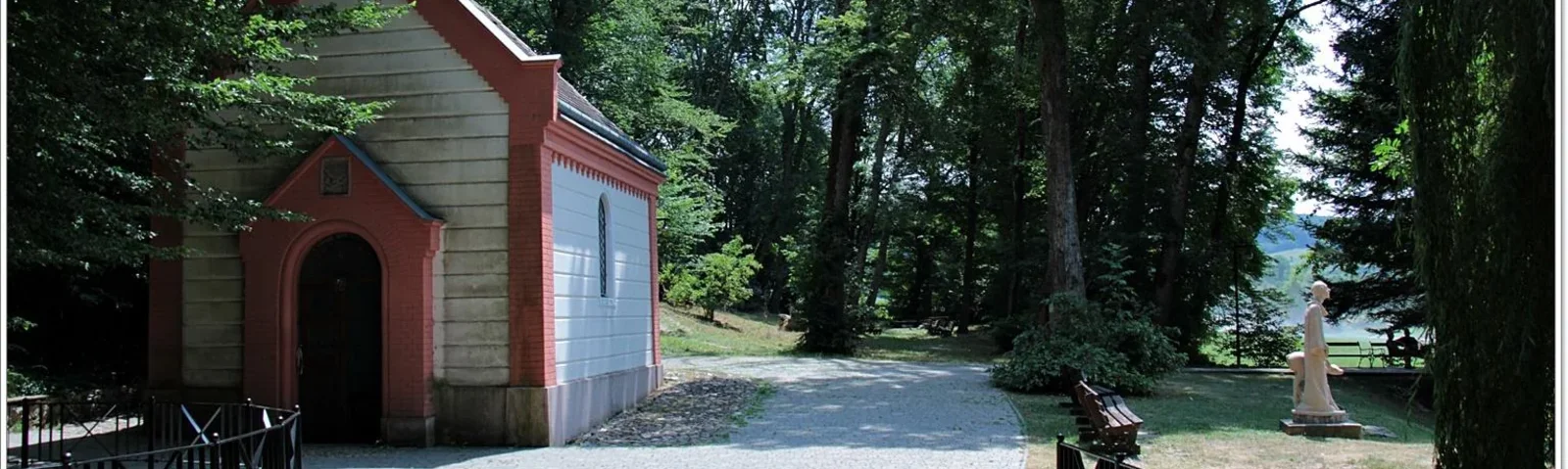
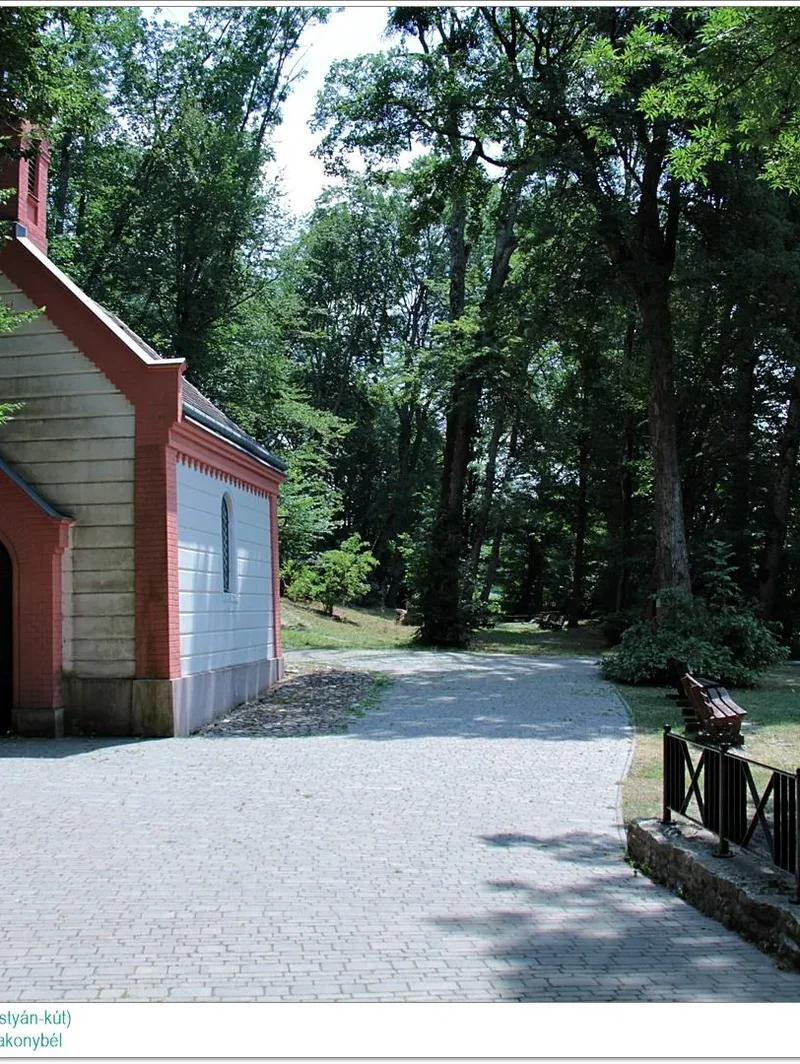
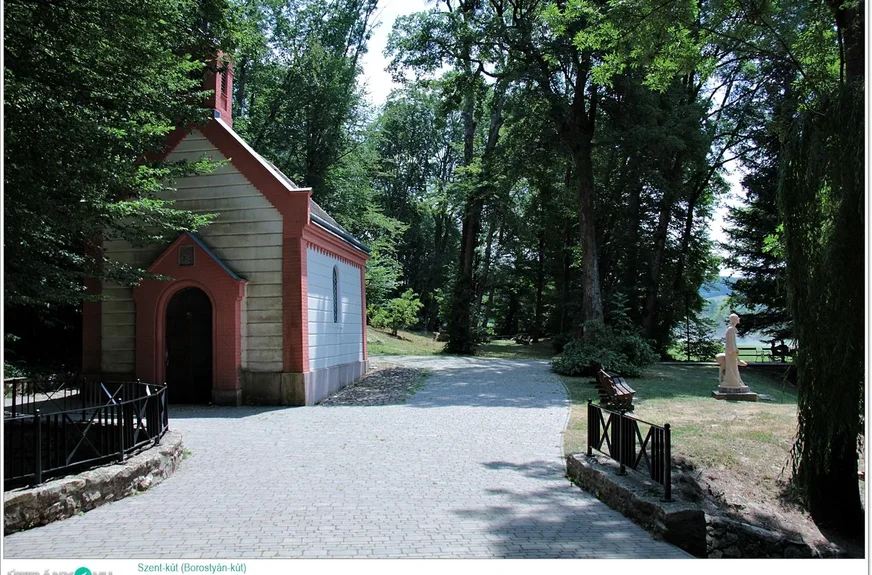
A chapel was first erected at the memorial site in 1826, which was replaced at the end of the 19th century by the building that stands there today. It was then that the 14-station Way of the Cross and the Calvary sculpture atop the rock were put in place —featuring the figures of Christ, along with the Virgin Mary and Saint John.
Three springs flow in front of the chapel; their water is collected in a stone basin within a well house. In the center of the basin, a base relief depicts the legend of Saint Gellért associated with this site, and on the same level, a statue commemorating Saint Gellért and a fawn is placed, created by István Opra Szabó, a sculptor from Zirc.
Next to the chapel, a staircase leads to a walled-up rock crevice, in front of which stands a statue of Our Lady of Lourdes. According to oral tradition, this cave may have been the site of the hermitage.
The area around the chapel was restored in 1996 through a joint effort by the village, at which time the water from the springs was dammed to form a small pond, and a rest area was created along the shore. The names of the donors were engraved on the backs of the benches.
The area surrounding Szent-kút was named one of the seven natural wonders of Veszprém County in 2009.